Top 10 Tips for Healthy Winter Skin
Top 10 Tips for Healthy Winter Skin:
Cold, dry air can leave your skin itchy, red, and irritated. Combat dry winter skin with these expert tips for retaining your skin’s natural moisture.
Winter can wreak havoc on your skin. It can feel like there’s no escape: Cold, blustery conditions outside leave your skin red and raw, while indoor heat zaps moisture from the air and from your skin.
Even the things that make winter wonderful. Such as sitting by a roaring fire, can dry your skin, as the American Academy of Dermatology (AAD) notes. And although a hot shower can warm you up, hot water strips skin of its natural oils. According to the University of Tennessee Medical Center.
Happily, there are many ways to combat the causes of dry skin and keep yourself moist and supple all season long, including some easy changes to your everyday routine.
Read on for 10 simple, dermatologist-approved tips for glowing winter skin.
Top 10 Tips for Healthy Winter Skin
- Invest in a Humidifier to Maximize Moisture
“In the cooler winter months, the outdoor air typically holds onto less water and is drier and colder.” Says Dr Javeria Jia, a dermatologist with Skin Care in Your Dental and Medical Center. A humidifier in your home or office will restore moisture to the air, helping to keep your skin hydrated.
Run a humidifier in your entire home or in rooms you spend the most time in, and aim to keep indoor humidity levels between 30 and 50 percent. One option is to turn it on overnight while you’re sleeping. If you’re unsure of your home’s humidity levels. You can purchase a humidity meter, such as the highly rated Goabroa unit- Keep Thermostat Temperatures Cool and Comfortable
If you’re looking to escape dry, chilly outdoor air, you may be tempted to crank up the heat as soon as you get home. But high central heat can make the air in your house even drier. Notes the American Osteopathic College of Dermatology (AOCD). Try a cool yet comfortable setting to prevent your skin from drying further — the AOCD recommends 68 to 75 degrees F.- Lower Water Temperatures for Showering and Hand-Washing
Long, steamy showers may sound like a great idea when it’s cold and blustery. Very hot water can dry out the skin, says Dr Javeria Jia, a dermatologist in UAE and the certified member of American Board of Aesthetic. A 5- to 10-minute warm shower (or bath) is less likely to worsen dry skin than a hot one,
A good rule of thumb: If the water causes your skin to turn red, it’s too hot, notes UPMC.
You should also avoid using excessively hot water to wash your hands. This is especially true if your hands tend to be red, scaly, and itchy (potential signs of eczema on the hands, per the National Eczema Association). Dry skin from exposure to hot water or cool winter air can trigger an eczema flare-up.
Cooler water seems to be as effective as warm water at removing germs and is less irritating to the skin, according to the Centers for Disease Control and Prevention (CDC).- Top 10 Tips for Healthy Winter Skin
- Opt for Gentle, Fragrance-Free Body Cleansers
When bathing, bar soap can worsen dryness by stripping the skin’s natural oils and disrupting the microbiome, Dr. Javeria says.
“For those with dry skin, I recommend using body wash,” Dr. Javeria says. “Look for washes that are labelled ‘for sensitive skin’ or ‘dye free’ and ‘fragrance-free.’ Oftentimes they contain fewer drying ingredients and more moisturizing ones like hyaluronic acid, ceramides, oils, shea butter, and oats.”
Also, look for products labelled “fragrance-free,” advises the AAD. “Unscented” products may actually contain chemicals that neutralize scent and can cause irritation.- Modify Your Skin-Care Regimen for the Season
If your skin is dry and itchy, Dr Javeria recommends you scale back on the use of skin-care products containing alpha-hydroxy acids (AHAs) and retinoids on the face, as these can cause the issue to worsen and may even be a sign of an irritant dermatitis (a skin reaction that occurs after prolonged exposure to an irritating substance). “Once the skin is healed, you can restart the retinoid and alpha-hydroxy acids slowly,” she says.
In addition to skipping AHAs and retinoids when the skin on your face is dry, the AAD recommends steering clear of products that contain alcohol and fragrances, as this will help skin retain its natural oils.
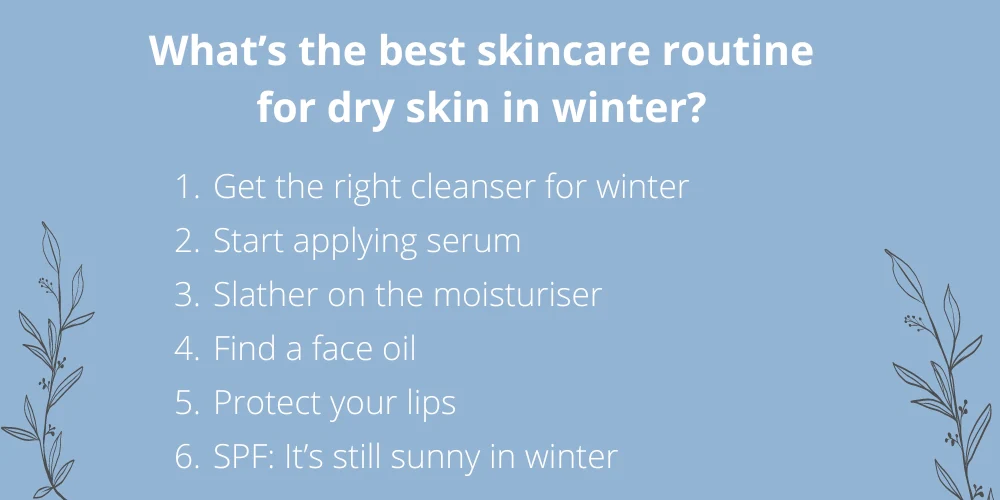
Instead, choose oils and creams for your skin-care routine, and consider applying a moisturizer on top of your toner if the latter is causing dryness, Dr Javeria says.
At night, use a richer moisturizer on your body, including your arms, legs, and midsection. “Look for occlusives, such as petrolatum, squalene, and shea butter,” Dr Javeria says. “These are ingredients that seal in moisture by forming a protective seal over the skin.” Hayag also recommends seeking out a product with moisturizing humectants, such as hyaluronic acid and glycerine. These are great ingredients for the face, as they allow the skin to breathe and are unlikely to contribute to acne.
And don’t forget to moisturize the rest of your body, either. “For the body during the winter, I recommend using a thicker cream that comes out of a jar or tube as opposed to a pump,” Dr Javeria says. “Lotions that come out of a pump tend to be thinner and waterier, so they can often just evaporate from the skin’s surface after application and are not thick and moisturizing enough.”
As for your lips, a moisturizing balm (such as petroleum jelly or another ointment) can help heal dry, cracked lips and keep them from getting chapped, according to the AAD. - Moisturize Hands Frequently, Especially After Washing
Hand-washing, as the CDC notes, is vital, especially when the common cold, flu, and COVID-19 are a threat. But “constant washing will cause the hands to take a beating,” says Dr Javeria Jia, a board-certified dermatologist at your Dental and Medical Center
Apply hand cream after each washing. She also recommends wearing waterproof gloves to protect your hands while you’re washing dishes or cleaning around the house.
You can put on cotton gloves after applying moisturizer to help your skin absorb the cream, says Wesley.- Apply Sunscreen — Even on Gray Winter Days
On bright winter days, snow reflects the sun’s rays, which in turn multiplies your UV exposure. According to the Skin Cancer Foundation. UV rays have been linked to skin cancer, sunburn, and premature skin aging (such as wrinkles, leathery skin, and liver spots), per the American Cancer Society.
That means whether you’re out on the slopes, playing in the snow, or walking through a parking lot on an errand run, it’s just as important to apply sunscreen in the harsh winter weather as it is in the summer.
Don’t be fooled by darker, dreary days in winter, either. Up to 80 percent of the sun’s harmful UV rays can permeate clouds and still cause damage, according to the Skin Cancer Foundation.
Before you go outside, apply a broad-spectrum sunscreen with an SPF of 30 or higher with water resistance and moisturizing ingredients such as lanolin or glycerine to all exposed areas of your body, says the Skin Cancer Foundation.- Wear Appropriate, Comfortable, non-irritating Clothing
Many cold-weather fabrics can aggravate dry winter skin. “Keep wool and rough clothing from directly touching your skin,” Javeria Jia says. “This can cause dry skin to get irritated and itchy.”
Instead, wear light layers made from soft, breathable materials (like cotton or silk) directly against your skin. After that, pull on your heavier, warmer sweaters, recommends the AAD.
Be sure to protect your hands from cold winter air with gloves or mittens. If wool gloves are too irritating, try leather ones, Dr Javeria suggests.
- Remember to Eat Right and Stay Hydrated
Don’t expect drastic results, but it may be possible to moisturize your skin slightly from the inside out. “Staying hydrated by drinking plenty of fluids, like water, is one of the best things. You can do via diet to avoid dryness,” Dr Javeria Jia says. One small study found that people with low water intake were able to positively impact their skin hydration by drinking more water. (in this case, two litters of water more than their usual daily intake).
Your diet may play a role as well. “Avoiding processed foods and sugars, and eating whole foods that are rich in essential vitamins, minerals, and fatty acids will keep the body and skin healthy,” Dr Javeria Jia says. - Pat Yourself Dry, Then Lock in Moisture
Pat your hands dry after washing them. The AOCD says that blotting or patting the skin dry rather than rubbing it helps retain more moisture.
Do the same when towelling off after a shower. Advises Dr Javeria Jia: “Blot skin dry and apply a thick moisturizer within a few minutes after bathing to seal the water into the skin.”
A Final Word on Healthy Winter Skin
If you still experience dryness, discomfort, redness, and irritation after trying these healthy skin tips. Dr Javeria Jia Best Dermatologist in Dubai suggests using an over-the-counter 1 percent hydrocortisone cream. “If you don’t see improvement in a few days, talk with your doctor,” Dr Javeria Jia says. You may need a prescription-strength moisturizer to overcome winter’s drying effects on your skin. Your dry skin may be a sign of a skin condition that needs to be addressed, according to the AAD.